> For the complete documentation index, see [llms.txt](https://dronenaksha-docs.aeromegh.com/llms.txt). Markdown versions of documentation pages are available by appending `.md` to page URLs; this page is available as [Markdown](https://dronenaksha-docs.aeromegh.com/5.-visualization/5.4-point-cloud.md).
# 5.4 Point Cloud
A point cloud is a group of points used to store data dynamically. LiDAR systems are frequently used for this.
The processed information from the LiDAR system develops point cloud data once it has gathered each individual reading and the numerous point data in a point cloud are represented by light pulses.
Surfaces and objects are recorded using a sequence of pictures taken during a fly-over. A point cloud of the object can be created through surface matching and triangulation by matching various photo views of a single view or object.
Steps to use point cloud image are:
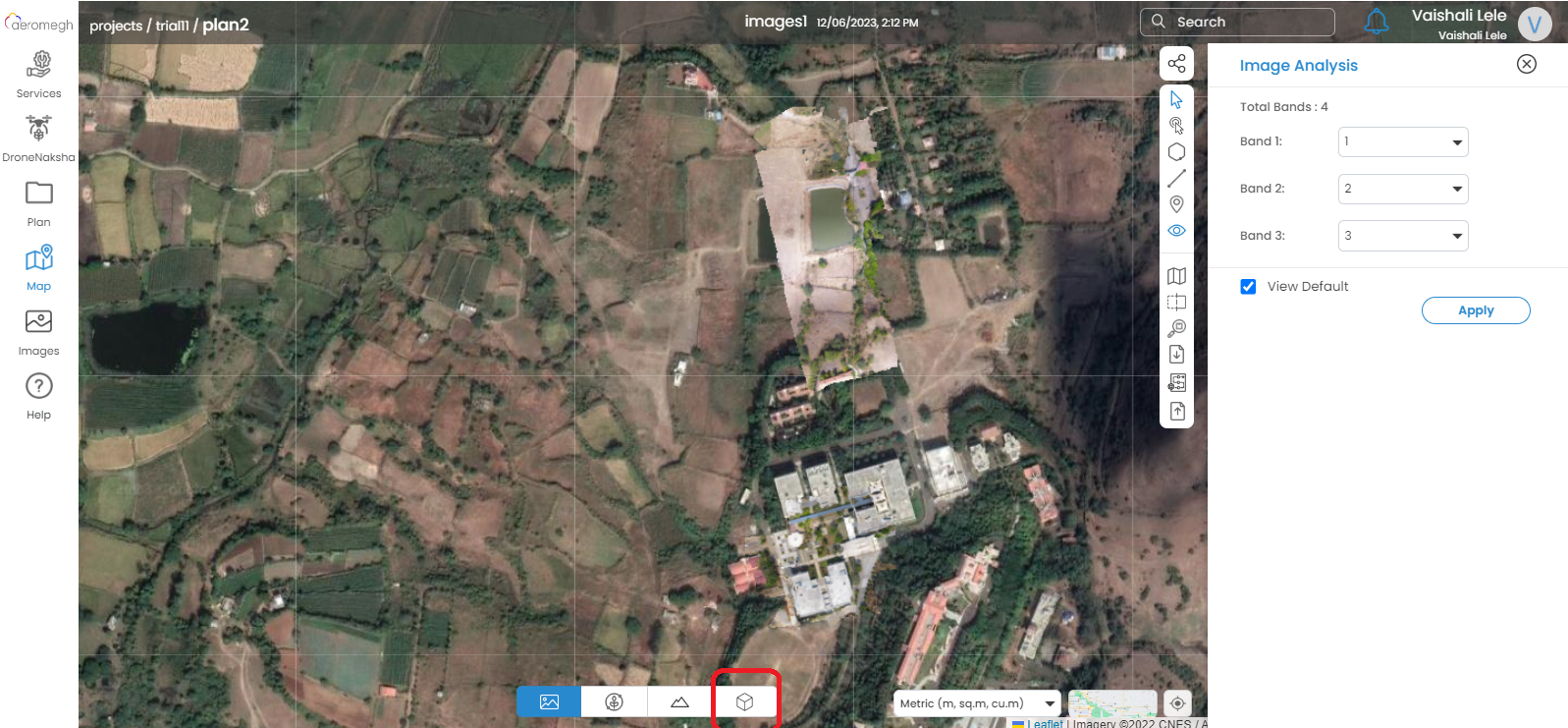
1. Open an Orthomosaic image generated from DroneNaksha.
2. Click on the 3D option from the bottom menu.
Opening Point Cloud Option
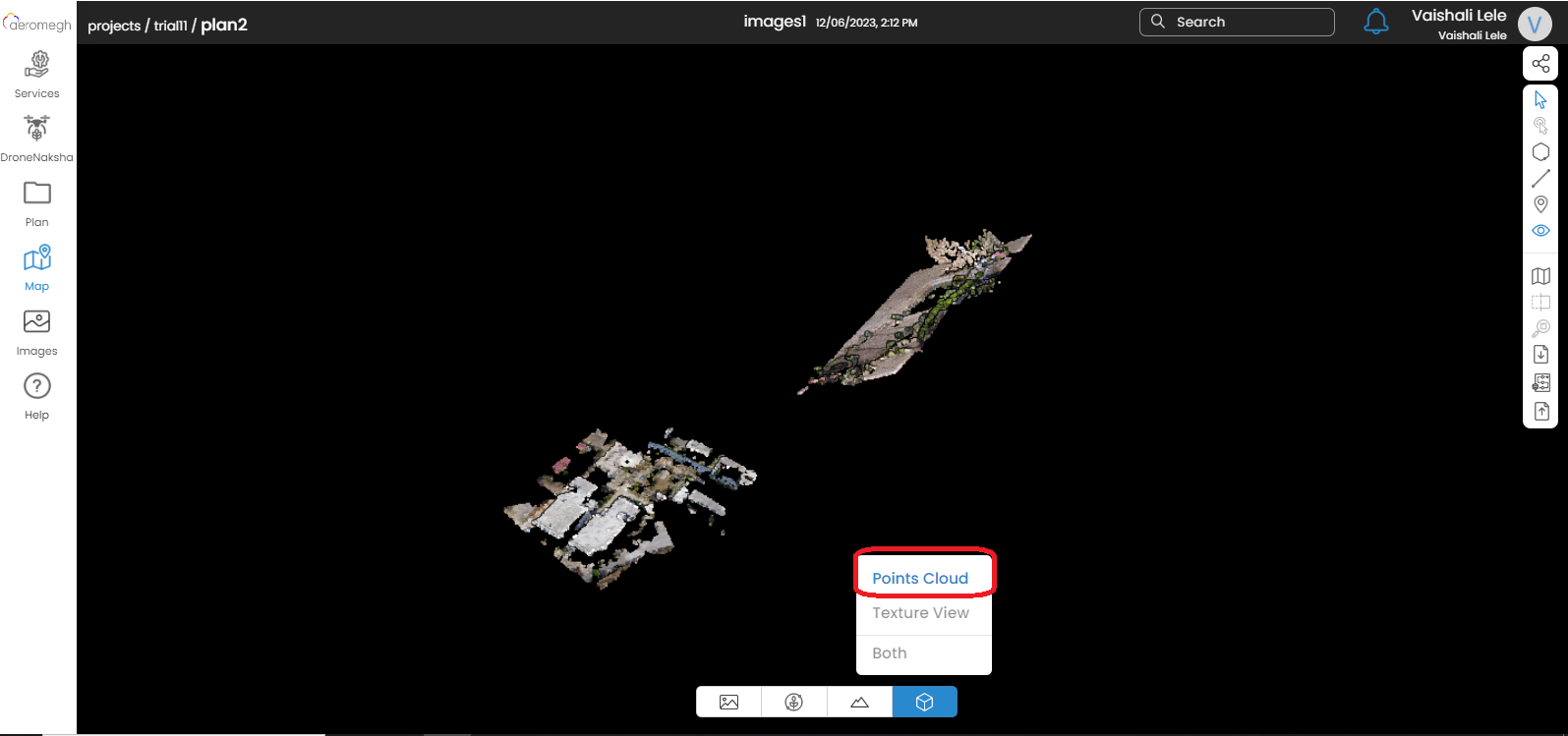
3. Three options will be displayed on the screen such as "Point Cloud", "Texture View", and "Both".
4. Select "Point Cloud" option to create a point cloud image as shown.
Point Cloud Image
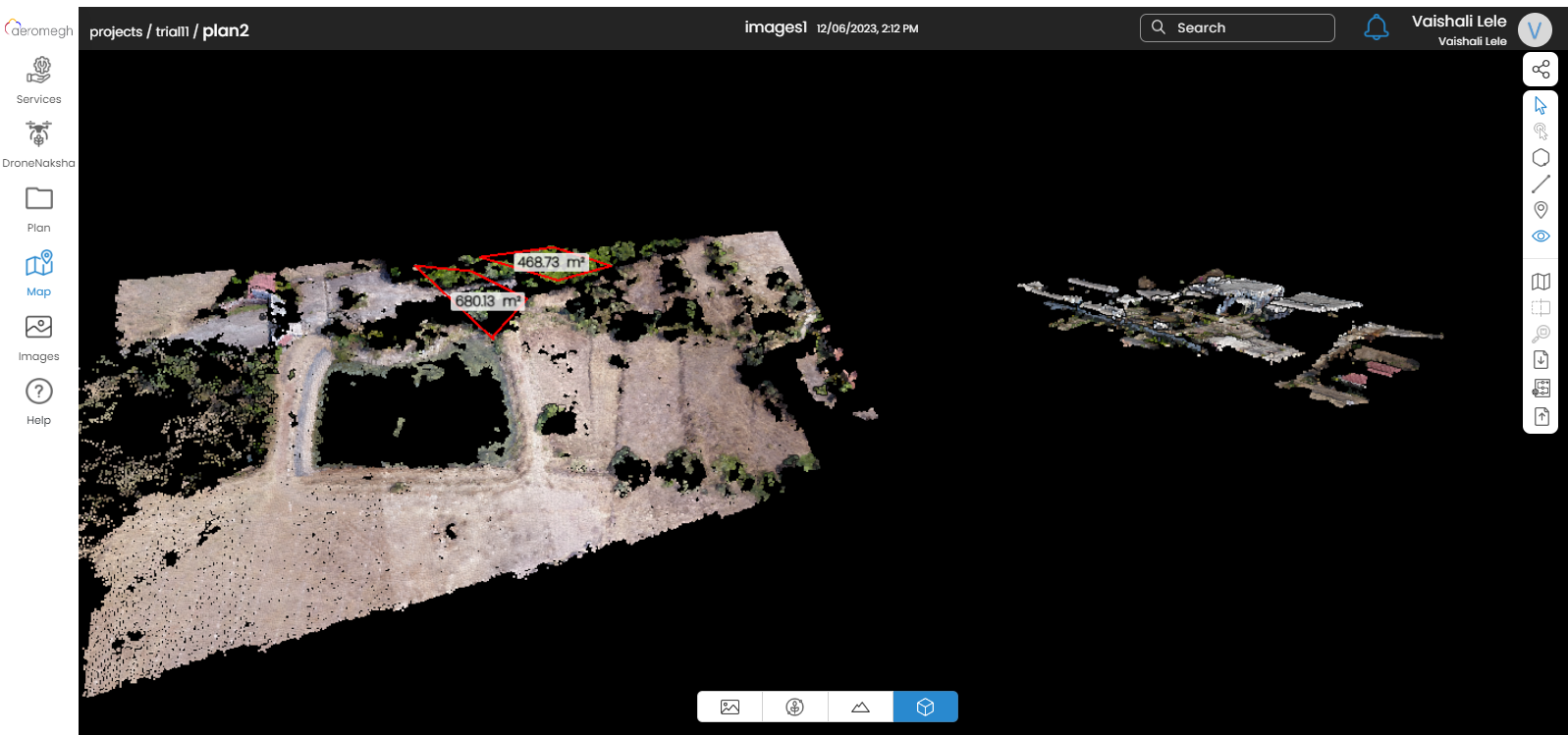
The image generated from point cloud can be rotated from any angle on any axis to observe the structure neatly.
The user may use measurement tools on this image to get the measurements of selected area.